Insights and thoughts on topics from watch collecting, handheld gaming to audio electronics and loudspeaker construction.
Recent Articles
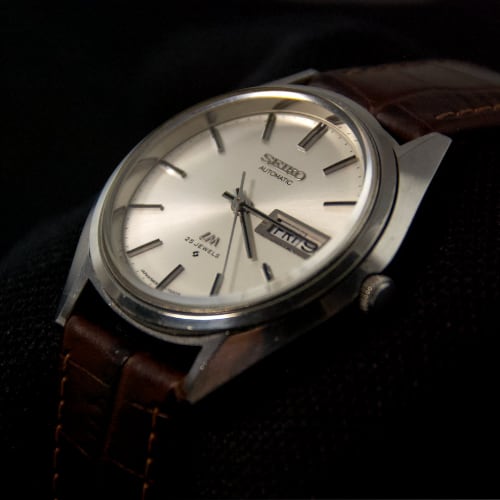
The watch I currently wear (Jan-2021): Seiko LordMatic 5606-7191
Background information
The 7191 is the second Tanaka style LordMatic watch manufactured by the Suwa factory. The previous model 7190 had a monolithic case. The 7191 looks identical but uses a screw back case and has no parts in common. The design is similar to Tanaka style King Seikos of this period from Suwa, with an elegant dial and clean lines. Seiko offered the 7191 model from 1972 to 1974 in multiple variations. Apart from the classic sunburst dress watch dial (420) there exists a light gray (421), a shaded green gray (428), and a silver linen texture and Roman numbers (480) dial. The dress watch dial is available in a gold plated case (420 SGP). There is a sportier version with dark blue (554), black (556), or shaded green (557) dial. Those models cost less and used the 23 jewel movement in stead of the 25 jewel variant. In 1974 Seiko added two more variants with cut glass crystal: A white (810) and a shaded green with King Seiko VANAC alike appearance (816). All models come with a stainless steel strap. In 1974 this watch cost between 17000yen for the standard stainless steel dress watch up to 21500yen for the gold plated version.
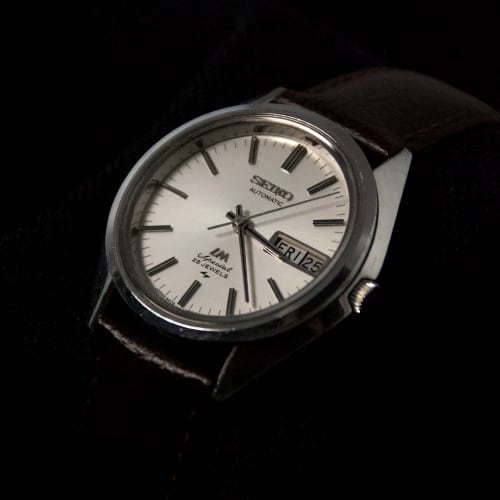
The watch I currently wear (Nov-2020): Seiko LordMatic 5206-6130
Background information
The Seiko LordMatic 5206-6130 appeared in the 1973 Seiko catalog. The watch exists in two variants: With a white (270) and with a dark (272) dial. Both of them use a stainless steel strap and cost 21.000 yen. To put he price into perspective, a LordMatic 5606-7190 cost 17.000 yen and a King Seiko 5226-6000 35.000 yen. The Daini factory manufactured the watch model from 1972 to 1973 . This particular watch was produced in September 1972. It was one of the few Lord Matic watches with a 5200 stream movement and a Tanaka Grammar of Design appearance. LordMatic models with a 5200 stream movement are marked with a Special label on the dial.
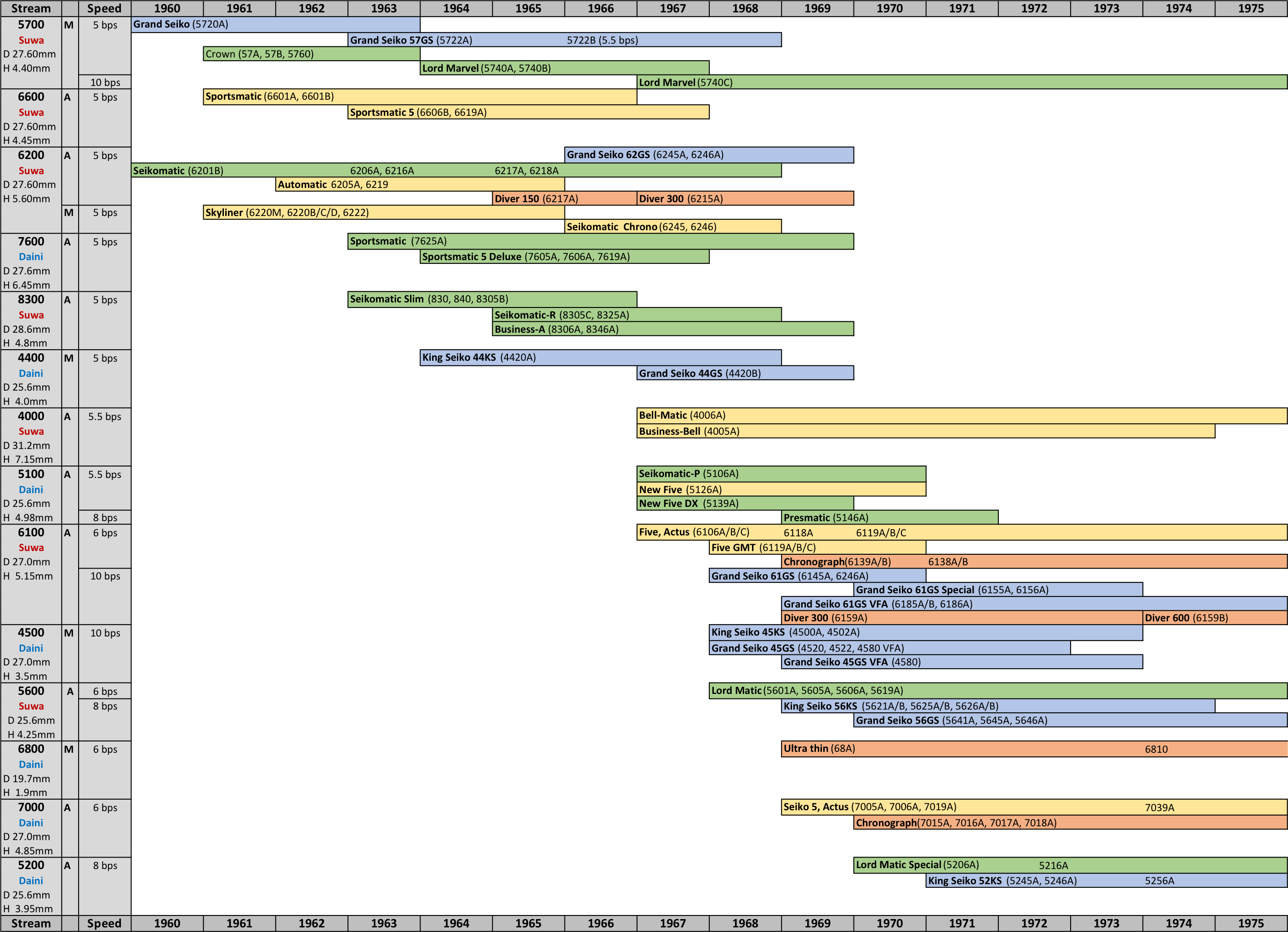
An overview to vintage Seiko watches
Vintage Seiko watches attracted my attention for two reasons: Seiko advertisements for Grand-Seiko watches, which referred to their heritage, and the fact that the 4S15 movement was a re-release of the 52 movement stream from the seventies. We must first define what vintage actually means. Vintage is often used to differentiate products before the period of automated industrial production (usually before 1970). For Seiko watches I would change this to watches before 1975, so before the Quartz domination. It is of course true that Seiko also underwent a transition from a manufacture production to a more automated industrial production at the end of the sixties, but it is nevertheless sensible to draw the line at the definitive end of the era of mechanical watches in the seventies. Once you turn your attention to Seiko vintage watches, you will soon notice that there is a lot to learn and discover about these watches. At the beginning of the sixties, Seiko entered the western market and dared to challenge the established Swiss watch industry in terms of technology and quality. The series that comes to mind in this context is of course Grand Seiko.
An overview about the Seiko 7S movement family
Seiko always offered mechanical watches even after the Quartz revolution they
themselves have initiated. The main workhorse movement in the mid-range was the
7000 series that was produced from the seventies until the end of the nineties.
In 1996 Seiko introduced the 7S26 family as a successor and replacement for the
7000 series for the mainstream market of automatic watches and has since been
a mainstay in mechanical Seiko watches.
Origin of all 7S movements, a 7009 movement from the eighties
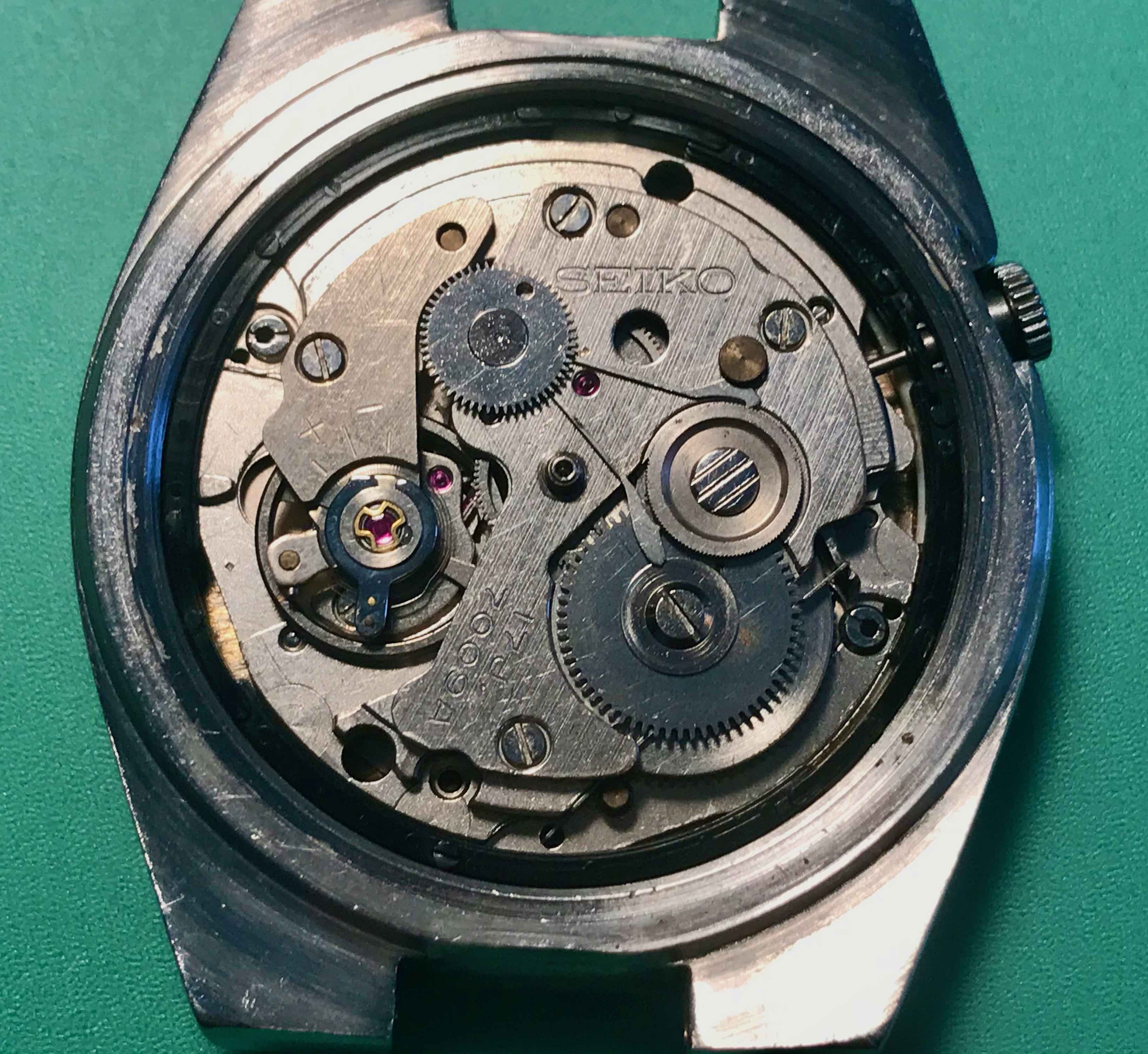 Seiko offered
mechanical watches throughout the eighties, and the 7000 movements were besides
the 6300 series the movements used, but this is the topic of another article.
In this article we will focus on the movements that descend from the 7S26
movement introduced in 1996. This movement lacked advanced features as hacking
second and hand-winding in the beginning, but Seiko iterated on this design
for the last 25 years adding those features in later incarnations. Until today
the 7S26 design is the basis for all Seiko movements from entry level to
watches of the upper mid-range and even high-end watches.
Seiko offered
mechanical watches throughout the eighties, and the 7000 movements were besides
the 6300 series the movements used, but this is the topic of another article.
In this article we will focus on the movements that descend from the 7S26
movement introduced in 1996. This movement lacked advanced features as hacking
second and hand-winding in the beginning, but Seiko iterated on this design
for the last 25 years adding those features in later incarnations. Until today
the 7S26 design is the basis for all Seiko movements from entry level to
watches of the upper mid-range and even high-end watches.